
Table of Contents
- What are the best boxing hand wraps?
- What Do Boxing Hand Wraps Do?
- Why Hand Wraps Are Non-Negotiable
- Hand Wrap Material Breakdown
- Boxing Hand Wraps: Quick Comparison
- 3m vs 4.5m: Which Length Do You Need?
- How to Wrap Your Hands for Boxing: Step-by-Step
- Top Hand Wrap Picks: Pros, Cons, and Best For
- How to Choose the Right Hand Wraps
- Gel Inner Gloves vs Traditional Wraps
- Common Hand Wrap Mistakes
- Hand Wraps by Skill Level
- Wrap Care and Replacement
- FAQs
What are the best boxing hand wraps?
The best boxing hand wraps depend on your experience level and training context:
- Beginners: ADIDAS Hand Wraps (3m or 4.5m)
- Intermediate to advanced training and competition: STING Elasticised Hand Wraps (4.5m)
- Premium quality and materials: BOXRAW Handwraps
- Quick sessions and convenience: Fortress T1 Fastwraps
- Competition and hard sparring prep: Empire Pro Tape Handwrap Kit
Browse our full selection of boxing hand wraps and tape, or read on for the complete breakdown. For the full overview of all boxing protection, see our complete boxing protective gear guide.
What Do Boxing Hand Wraps Do?
Boxing hand wraps compress the 27 small bones in each hand into a stable unit, protect the knuckle ridge from impact, and hold the wrist in alignment on impact. No glove replaces this. Wraps are structural support. Without them, the force of every punch lands on individual bones and tendons that were not designed to absorb it alone.
Why Hand Wraps Are Non-Negotiable
When you throw a full-power punch, force travels back through your knuckles, through the metacarpals, and into the wrist. Hand wraps manage that force in three ways.
First, they immobilise the wrist. A loose wrist bends on impact. That is how sprains and fractures happen. A properly wrapped wrist stays aligned with the forearm.
Second, they pad the knuckle ridge. The knuckles take concentrated pressure even inside a well-cushioned glove. Wraps distribute that load across a wider surface.
Third, they bind the small hand bones together. Metacarpal fractures happen when those bones shift under load. Wraps lock them in place so they absorb impact collectively.
Wraps go on before gloves. Every session. No exceptions.
Hand Wrap Material Breakdown
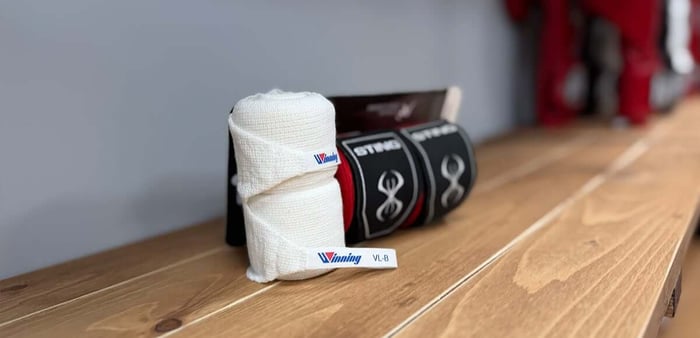
Mexican-style (semi-elastic): Blend of cotton and elastic fibre. Conforms tightly to the hand without bunching, moulding around each knuckle and settling snugly at the wrist. The most popular choice among serious fighters. Precise compression, reliable support, clean fit inside the glove.
Traditional cotton: Firmer and less forgiving. No stretch, so your technique needs to be deliberate. Durable, wash well, and provide solid knuckle padding.
Elastic cotton: Fully elastic, the easiest type to apply. Stretch significantly and bounce back into shape. Good for beginners still developing technique. The forgiveness compensates for inconsistency in application.
Gel inner gloves: Slip-on with gel padding over the knuckles. Fast to apply, no technique required. Less wrist support than any cloth wrap. Covered in detail in the gel vs cloth section below.
Boxing Hand Wraps: Quick Comparison
| Wrap | Material | Length | Protection Level | Best For | Price Range |
|---|---|---|---|---|---|
| ADIDAS Hand Wraps | Elastic cotton | 3m or 4.5m | Entry to intermediate | Beginners, daily training | Budget |
| STING Elasticised Hand Wraps | Semi-elastic | 3m or 4.5m | Intermediate to advanced | Regular training, competition prep | Mid-range |
| BOXRAW Handwraps | Mexican semi-elastic | 4.5m | Advanced | Quality-focused fighters | Mid-range |
| Fortress T1 Fastwraps | Hybrid | Standard | Intermediate | Quick sessions, convenience | Mid-range |
| Empire Pro Tape Handwrap Kit | Gauze and tape | Fight length | Professional | Competition, hard sparring prep | Professional |
3m vs 4.5m: Which Length Do You Need?
3m (120-inch) wraps suit smaller hands or lighter training. Enough material to cover the wrist, knuckles, and thumb without multiple finger passes. Faster to apply and less bulk inside the glove. Good for beginners learning the technique.
4.5m (180-inch) wraps are the standard for most adult fighters doing bag work, sparring, or competition. The extra length allows individual passes between each finger, thicker knuckle padding, and more wrist passes for maximum stability. If you train hard and frequently, 4.5m is the correct choice.
When in doubt, go longer. You can always reduce wrist passes. You cannot add material that is not there.
How to Wrap Your Hands for Boxing: Step-by-Step
A high-quality wrap applied poorly offers little structural support. This is the standard method used across UK boxing gyms.
Step 1 -- Loop over the thumb. Start with your hand flat and fingers spread. The loop anchors the wrap and stops it riding down during the session.
Step 2 -- Wrap the wrist. Wind the wrap around your wrist three times, moving away from your thumb. Snug but not tight enough to cut circulation. You should be able to make a fist without discomfort.
Step 3 -- Wrap the knuckles. Bring the wrap up over the back of the hand and across the knuckles three times. Hold your hand in a loose fist as you wrap. This locks padding over the striking surface.
Step 4 -- Wrap between the fingers. With a 4.5m wrap, pass the material between each pair of fingers from the little finger to the index finger. This separates and stabilises each metacarpal. With a 3m wrap you can skip this step.
Step 5 -- Cross the palm. Bring the wrap diagonally across the palm and back around the wrist. Repeat two to three times to reinforce the arch of the hand.
Step 6 -- Finish at the wrist. Wind the remaining material around the wrist and secure with the velcro closure. Every part of the hand should feel compressed and stable. Fingers should not tingle or go numb.
A correctly wrapped hand takes under a minute once the technique is habit. Start with a mirror and five minutes per hand.
Top Hand Wrap Picks: Pros, Cons, and Best For
ADIDAS Hand Wraps
Pros:
- Accessible price point
- Elastic material is forgiving for beginners still developing technique
- Reliable construction from a well-known brand
- Available in 3m and 4.5m
Cons:
- Elastic cotton has a shorter lifespan than semi-elastic options under heavy use
- Less precise compression than Mexican-style wraps
- Basic construction without premium features
Fit and feel: Comfortable and simple. Does not demand precise technique to produce a usable result.
Best for: Beginners building a training routine and fighters who want a reliable, low-cost everyday wrap.
STING Elasticised Hand Wraps
Pros:
- Semi-elastic construction delivers precise compression
- Available in 3m and 4.5m covering different training contexts
- Durable enough for regular, intensive use
- Holds shape well after repeated washing
Cons:
- Requires reasonable wrapping technique to get the best from the semi-elastic material
- Mid-range price may feel unnecessary for beginners who are not yet sparring
Fit and feel: Precise and settled inside the glove. Conforms well to the hand without bunching.
Best for: Intermediate to advanced fighters, regular sparring, and competition preparation. Explore the full STING boxing range.
BOXRAW Handwraps
Pros:
- Premium materials with careful construction
- Mexican semi-elastic provides excellent hand conformation
- Holds shape session after session
- Sits cleanly inside the glove without bunching
Cons:
- Higher price than entry-level options
- 4.5m only -- not an option if you need a shorter wrap
Fit and feel: Premium feel with a snug, precise fit. Clearly a step up in material quality from standard elastic cotton options.
Best for: Fighters who prioritise build quality and want a wrap that performs and looks right every session.
Fortress T1 Fastwraps
Pros:
- Quick to apply -- bridges the gap between gel gloves and traditional wraps
- Built-in knuckle protection
- Good option for back-to-back sessions or lunchtime classes
Cons:
- Less wrist support than a full traditional wrap
- Not a substitute for cloth wraps in hard sparring or heavy bag work
- Hybrid design means compromises in both speed and protection
Fit and feel: Fast and convenient. More structured than a gel glove but less comprehensive than a full wrap.
Best for: Fighters who need speed without fully giving up hand support.
Empire Pro Tape Handwrap Kit
Pros:
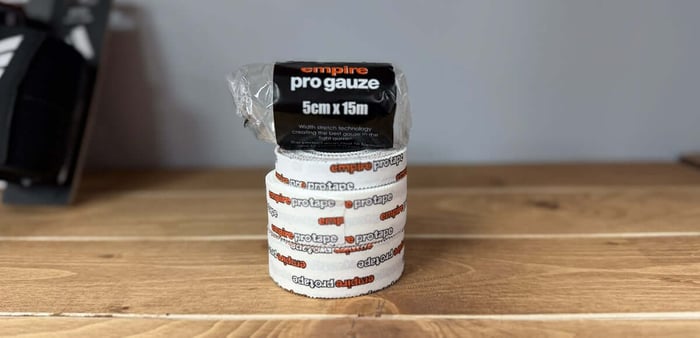
- Professional-grade gauze and tape used by cornermen at the highest level
- Maximum hand support for competition and hard sparring
- Fight-night quality in daily training
Cons:
- Single-use by design -- stock up accordingly
- Requires more application skill than reusable wraps
- Higher ongoing cost for regular training use
Fit and feel: The most supportive hand wrapping available at any level. Used correctly, nothing provides better structural stability.
Best for: Competition preparation, hard sparring sessions, and fighters who want fight-night wrapping quality in training.
How to Choose the Right Hand Wraps
Your level: Beginners need a forgiving, elastic wrap that compensates for developing technique. The ADIDAS Hand Wraps cover this. As technique and training intensity increase, move to semi-elastic options for better precision.
Your hand size: Smaller hands suit 3m. Larger hands and harder training demand 4.5m.
Your training type: Bag work and heavy sparring benefit from the thicker knuckle coverage of a full 4.5m wrap. Quick technique sessions and pad work can use fast wraps or inner gloves.
Your priorities: If convenience matters most, gel inner gloves or fast wraps are the answer. If maximum protection matters most, a full semi-elastic or gauze-and-tape wrap is the answer. Many fighters use both.
Gel Inner Gloves vs Traditional Wraps
Gel inner gloves, such as the Pro Box Gel Knuckle Protectors and Pro Box Super Inner Gloves with Gel Knuckle, slip on in seconds. No technique required. For a lunchtime session, a technique class, or back-to-back coaching, they are a practical convenience.
The trade-off is wrist support. Gel gloves focus protection on the knuckles and offer minimal compression at the wrist. If you have a history of wrist problems or you punch with genuine power, cloth wraps remain the correct choice.
The most effective approach for many fighters is using both: gel gloves for light pad work and technique, cloth wraps for bag work, sparring, and competition preparation.
Common Hand Wrap Mistakes
Skipping wraps entirely: The single most common mistake in gym boxing. No level of glove padding compensates for the structural support that wraps provide.
Using wraps that are too short: 3m wraps on large hands, or for heavy bag and sparring sessions, leave gaps in coverage. Use 4.5m for any serious training.
Wrapping too tight: Cutting off circulation creates its own problems. Snug and stable, not restrictive.
Not washing wraps regularly: Wraps absorb sweat every session. Without washing, they degrade faster and become a hygiene problem. Wash after every session.
Using worn-out wraps: Once the elastic has gone and the velcro no longer grips, the wrap is not doing its job. Replace every three to four months for fighters training regularly.
Hand Wraps by Skill Level
Beginner: ADIDAS Hand Wraps in 3m or 4.5m. Forgiving and reliable while you develop technique. If you are also sorting the rest of your kit, see our best boxing headgear for sparring and competition guide and our best boxing mouthguards and gum shields for sparring and competition guide.
Amateur Competitor: STING Elasticised Hand Wraps in 4.5m. The precision and durability that competition-level training demands.
Professional Fighter: Empire Pro Tape Handwrap Kit for fight night and hard sparring. STING or BOXRAW wraps for daily gym sessions.
Wrap Care and Replacement
Washing: Machine wash in a mesh laundry bag on a gentle cycle after every session. Cold or warm water. No bleach or fabric softener.
Drying: Hang to air dry. Never tumble dry. Heat shrinks the material and degrades the elastic.
Storage: Roll after drying. Keeps them compact, crease-free, and ready for the next session.
When to replace: Once elastic loses its snap, velcro no longer grips, or fabric has thinned around the knuckle area. Fighters training four to five times per week should expect to replace every three to four months.
FAQs
Can I use hand wraps without gloves?
Not for any contact work. Wraps provide no cushioning against bag or pad impact. Always pair with gloves.
How tight should hand wraps be?
Snug and stable but not so tight that fingers tingle or go white. You should make a full fist without discomfort.
Are gel inner gloves good for sparring?
They work for light sparring but provide minimal wrist stabilisation. For hard sparring, cloth wraps are the correct choice.
How do I know if I have wrapped correctly?
Your hand should feel stable when you make a fist, with no loose material inside the glove and no tingling or numbness. If the wrap shifts during a session, re-wrap before continuing.
Do I need different wraps for different sessions?
It helps. Fast wraps or gel gloves for quick technique sessions. Full 4.5m cloth wraps for bag work, sparring, and competition prep. Running two or three pairs in rotation means you always have a clean, dry set ready. Don't forget to protect your teeth too — see our guide to the best boxing mouth guards.


